01Why Manufacturing Transformation Is Different
Manufacturing digital transformation is not the same as digital transformation in financial services, retail, or SaaS. Industrial enterprises operate in physical environments where the consequences of technology failure are measured not in customer complaints or lost revenue — but in production stoppages, safety incidents, and supply chain failures that ripple across entire industries.
The legacy of operational technology (OT) — PLCs, SCADA systems, industrial IoT devices, and proprietary automation infrastructure — sits alongside IT systems in an uneasy coexistence that creates integration challenges unique to the manufacturing sector. Any transformation strategy that ignores the OT/IT convergence challenge will fail at the shop floor, regardless of how elegant it looks in a boardroom presentation.
The biggest mistake we see manufacturers make is treating digital transformation as an IT project. It is an operational strategy initiative that requires the CEO, the COO, and the CIO to own it jointly — or it won't hold.
— Rahul Chaturvedi, Technical Account Manager, Crystal TechVentures
02The Five Pillars — Overview
After working with manufacturers across automotive, pharmaceutical, FMCG, and industrial equipment sectors, Crystal TechVentures has identified five structural pillars that consistently determine whether a digital transformation programme delivers lasting value or becomes another expensive technology implementation that fails to change operational outcomes.
03Deep Dive: Each Pillar in Practice
Pillar 1 — Connected Operations & OT/IT Integration
The shop floor is where manufacturing digital transformation is won or lost. Industrial equipment — CNC machines, conveyor systems, robotic arms, environmental sensors — generates enormous volumes of operational data that, in most manufacturers, either goes uncaptured or sits in isolated OT silos completely disconnected from enterprise systems.
The foundation of connected operations is an industrial IoT architecture that collects real-time data from assets, transmits it securely through edge computing nodes, and feeds it into a unified operational data platform accessible to both OT and IT teams. This is technically complex — legacy equipment may require custom interface adapters, proprietary protocols require translation layers, and cybersecurity must be designed in from the start rather than bolted on.
Key insight: Start with three to five high-value assets or production lines rather than attempting enterprise-wide sensor deployment from day one. Prove the value of connected operations on a contained scope, build the architecture, then scale. The "big bang" factory connectivity project is a proven path to delays and cost overruns.
Pillar 2 — Data-Driven Decision Making
Connecting assets generates data. Converting data into decisions is the work of Pillar 2. This requires a manufacturing data platform that unifies OT data from the shop floor with IT data from ERP, MES, SCM, and quality management systems — creating a single version of truth that every decision-maker in the organisation can access.
The most transformative application at this pillar is the digital twin — a real-time virtual representation of a physical asset, production line, or facility that allows engineers to simulate changes, predict failures, and optimise performance without touching the physical system. Manufacturers with mature digital twin programmes report 15–25% improvements in OEE (Overall Equipment Effectiveness).
Pillar 3 — Process Automation & Smart Manufacturing
Automation in manufacturing extends far beyond the production line. The highest-value automation opportunities in most industrial enterprises lie in the administrative and decision processes surrounding production — demand forecasting, production scheduling, quality exception management, supplier invoicing, and maintenance work order generation — not just in the physical assembly process.
Predictive maintenance is the flagship smart manufacturing capability: using sensor data, machine learning models, and historical failure patterns to predict equipment failure before it occurs. Best-in-class manufacturers have reduced unplanned downtime by 30–50% through mature predictive maintenance programmes.

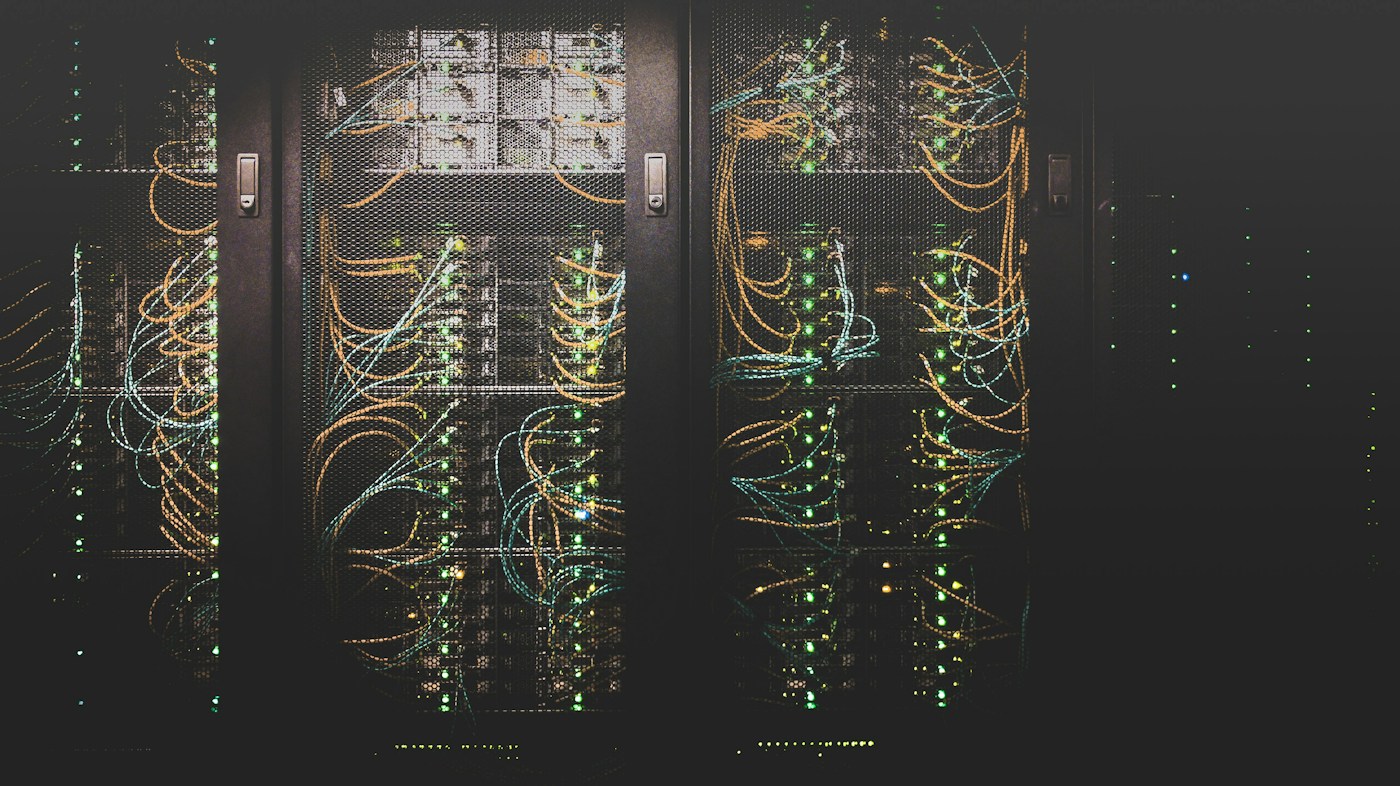
Smart manufacturing integrates physical production with digital data flows across the entire value chain.
Pillar 4 — Supply Chain Digitalisation
The COVID-19 pandemic exposed a fundamental vulnerability in global manufacturing supply chains: near-zero visibility beyond tier-1 suppliers. Manufacturers who had invested in supply chain digitalisation recovered faster, redirected procurement to alternative suppliers more quickly, and maintained production continuity where competitors could not.
Supply chain digitalisation encompasses real-time inventory visibility, AI-driven demand sensing, supplier performance monitoring, and dynamic production scheduling that can adapt to supply disruptions in hours rather than days. For manufacturers with complex global supply chains, this pillar often delivers the fastest and most measurable financial return.
Pillar 5 — Workforce Transformation & Digital Culture
Technology without people capability is infrastructure without purpose. The fifth pillar is consistently the most underfunded and most cited as the primary cause of transformation stalling after initial deployment. Equipping operators, engineers, and managers with the skills, tools, and confidence to work in a digitally transformed environment is not a training programme — it is a multi-year cultural change initiative.
The manufacturers that sustain digital transformation invest in digital capability development at every level: operators who understand their equipment's digital twin, supervisors who can interpret real-time OEE dashboards and act on them, and senior leaders who can read data and make decisions based on it rather than deferring to intuition built over decades.
The hidden multiplier: In our analysis across 25+ manufacturing transformation programmes, Pillar 5 investment had the highest correlation with long-term value retention. Programmes that invested less than 15% of total budget in workforce transformation saw 60% of their digital capability erode within 24 months of go-live as people reverted to familiar processes.
04The Digital Maturity Model for Manufacturers
Understanding where your organisation currently sits on the digital maturity spectrum is essential before designing a transformation roadmap. The four-stage maturity model below provides a framework for honest self-assessment — and for setting realistic, staged objectives.
05The Transformation Roadmap: 18-Month Framework
Digital transformation in manufacturing is a multi-year journey, but early wins matter enormously for maintaining executive sponsorship, workforce confidence, and investment continuity. The 18-month roadmap below balances foundational work with rapid value delivery:
Discovery & Baseline Assessment
Current state audit across all five pillars. OT/IT landscape mapping. Identify high-value use cases and quick wins. Establish baseline metrics for OEE, downtime, and supply chain performance.
Foundation Build & Quick Wins
Deploy IIoT connectivity on 3–5 priority assets. Establish operational data platform. Launch first predictive maintenance pilot. Begin workforce digital literacy programme.
Scale & Integrate
Expand IIoT deployment across full production environment. Integrate OT data with ERP and MES. Launch operations command centre with real-time dashboards. Roll out supply chain visibility platform.
Intelligence Layer
Deploy AI-driven demand forecasting and production scheduling. Activate digital twin for critical production lines. Launch quality AI for automated defect detection. Advanced workforce upskilling programmes.
Optimise & Sustain
Closed-loop performance optimisation. Full supply chain digitalisation. AI model refinement and validation. Digital culture embedding across all teams. Define 24-month next-horizon roadmap.
06Measuring Transformation: KPIs That Matter
Manufacturing digital transformation programmes are notoriously difficult to measure because the value is distributed across operational, financial, and organisational dimensions simultaneously. The following KPI framework provides a balanced scorecard across all five pillars:
- Overall Equipment Effectiveness (OEE): The gold standard metric for manufacturing performance. A 5–10 percentage point improvement in OEE is a reasonable 18-month target for a mature transformation programme. Every point of OEE improvement translates directly to production capacity without capital expenditure.
- Unplanned Downtime Reduction: Measured as a percentage reduction in unplanned production stoppages. Best-in-class predictive maintenance programmes target 40–50% reduction within 12 months of deployment.
- Supply Chain On-Time-In-Full (OTIF): The percentage of customer orders delivered on time and in full. Supply chain digitalisation should move this metric by 8–15 percentage points for manufacturers starting below 85%.
- Inventory Turnover: AI-driven demand sensing and inventory optimisation typically improve inventory turnover by 20–35%, freeing significant working capital.
- Digital Adoption Rate: The percentage of the workforce actively using digital tools in their daily work — the leading indicator for Pillar 5 success and long-term transformation sustainability.
- Decision Cycle Time: How quickly can the organisation respond to a production problem, a supply disruption, or a quality issue? Mature digital manufacturers measure this in hours; legacy manufacturers in days or weeks.
Crystal TechVentures manufacturing practice: We begin every manufacturing transformation engagement with a structured 3-week Transformation Readiness Assessment across all five pillars — producing a maturity score, a prioritised value roadmap, and a business case with quantified ROI projections. Without this baseline, transformation investment cannot be governed or measured with confidence.